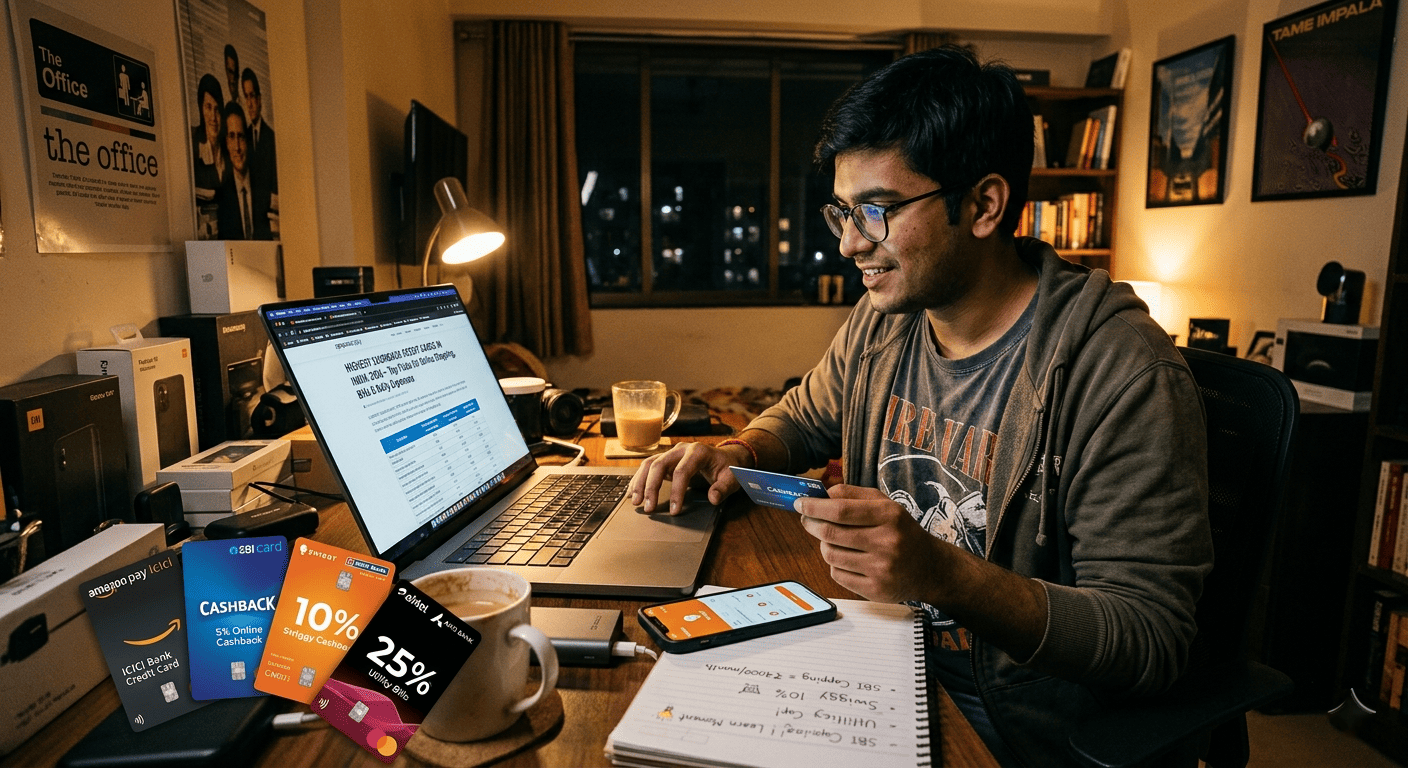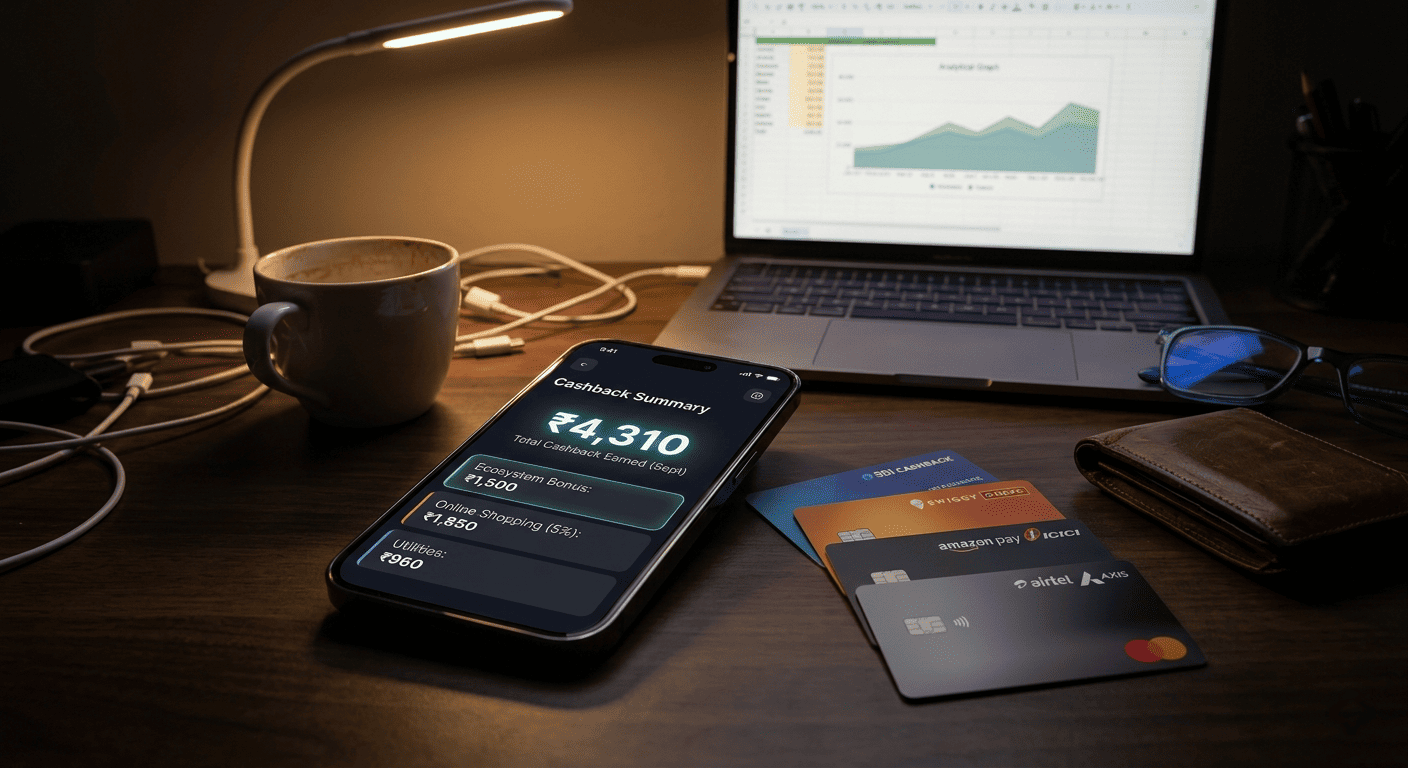
So there I was, sitting at a cafe in Mumbai, trying to settle a ₹2,400 dinner bill. I pulled out my wallet, feeling pretty smug about my shiny credit card setup. I swiped a popular cashback card, expecting a nice little chunk of change to drop back into my account. It wasn’t until a few weeks later, while scrolling through my monthly statement over midnight black coffee, that I realized I got exactly zero cashback on that meal. Why? Because the bank had quietly changed the merchant rules for that specific dining category a month prior.



That was my wake-up call. The credit card landscape in India has completely shifted. What worked brilliantly a year or two ago is probably losing you money today through subtle devaluations, modified reward caps, and adjusted annual fee waivers.
If you’re still using the same card for everything without tracking these changes, you’re essentially leaving money on the table. After testing, optimizing, and occasionally messing up my own spend distributions over the past year, I’ve mapped out the cards that are actually pulling their weight.
The Raw Truth About Pure Cashback Cards
Honestly, this surprised me—pure cashback cards used to be a simple, “set-it-and-forget-it” game. But the banks caught on to how much value people were squeezing out of them.
Take the SBI Cashback Card. At first, I thought this was the absolute holy grail of Indian credit cards. 5% completely automated cashback on almost any online spend? It sounded too good to be true, and frankly, it was. The bank implemented a massive rule change that took effect on April 1, 2026. They dropped the maximum cashback cap per statement cycle to ₹4,000 (down from the previous ₹5,000). Even trickier: they split that cap. Now you can only earn a maximum of ₹,2000 per month on online spends and another ₹2,000 on offline POS transactions.
If you are a heavy online shopper who routinely spends more than ₹40,000 a month online, you hit that ₹2,000 ceiling instantly, and your remaining spends earn nothing.
Because of that split cap, I had to pivot some of my monthly spending to the HSBC Live+ Card (which rebranded from their older cashback model). I didn’t expect this card to become my daily driver for food, but it offers a massive 10% accelerated cashback on dining, food delivery, and groceries. The catch is that this 10% tier is capped at ₹1,000 per billing cycle, but it frees up my online limit on other cards.
Here is how the pure cashback ground looks right now if you look at the actual numbers:
| Card Name | Joining / Annual Fee | Core Cashback Rate | Monthly Reward Limits & Caps | Best Used For |
| Cashback SBI Card | ₹999 + GST | 5% Online / 1% Offline | Capped at ₹2,000 for online & ₹2,000 for offline per cycle | General online retail (Flipkart, brand websites, etc.) |
| HSBC Live+ Credit Card | ₹999 + GST | 10% Food & Groceries / 1.5% clear online | 10% category capped at ₹1,000 per billing cycle; 1.5% is unlimited | Swiggy, Zomato, offline dining, and supermarket runs |
| Amazon Pay ICICI Card | Lifetime Free | 5% for Prime / 3% Non-Prime | No upper limit on earnings | Purely for Amazon India ecosystem spends |
What I learned the hard way here is that you cannot rely on just one cashback card anymore. If you’re a Prime member, keeping the Amazon Pay ICICI card in your digital wallet is a no-brainer because it’s free and has zero caps. But for everything else online, you have to play the balancing game between SBI’s 5% cap and HSBC’s food optimization.
Moving Up to Mid-Tier & Milestone Rewards
When you start spending a bit more heavily—say, above ₹25,000 to ₹30,000 a month—cashback cards start losing their edge compared to milestone reward points. This is where cards like the HDFC Regalia Gold or the Axis Atlas come into play.
But let me share a major mistake I made with HDFC’s ecosystem recently. I used to use the HDFC portal blindly for booking weekend flights, thinking the reward multipliers made up for any price differences. I failed to check a recent 2026 update where HDFC adjusted some of their SmartBuy tier structures and lounge access mechanics. Now, to keep those sweet domestic lounge perks active, you have to match specific spend milestones, and some of the lower-tier gift voucher conversions got watered down.
If you can hit the ₹60,000 quarterly spending threshold on the Regalia Gold, the milestone vouchers (like Marriott or Uber vouchers) keep it incredibly lucrative. But if you fall short of that milestone, the flat reward rate of 4 points per ₹150 spent feels incredibly slow.
If your goal is actual travel—not just gift vouchers—the Axis Atlas card is a fascinating beast. It doesn’t give you standard reward points; it gives you “Edge Miles.”
At first I thought the annual fee of ₹5,000 was steep for a mid-tier card, but when you look at the transfer ratios to partner airlines like SpiceJet, Air Vistara, or international hotel portals, the actual value multiplier can easily hit 4% to 6% if you book smart.
| Card Name | Fees (Annual / Joining) | Base Reward Structure | Key Milestone Bonuses | Ideal Spending Profile |
| HDFC Regalia Gold | ₹2,500 + GST | 4 Points per ₹150 retail; 5X on select brands | Flight/Hotel vouchers worth ₹1,500 on ₹1 Lakh quarterly spend | High retail spenders wanting predictable brand vouchers |
| Axis Bank Atlas | ₹5,000 + GST | 1 Edge Mile per ₹100 domestic; 5 Edge Miles on airline/hotel direct spends | Tier upgrades (Silver/Gold) based on annual spend milestones | Frequent flyers who prefer booking directly with airlines |
| Airtel Axis Bank Card | ₹500 + GST | 25% on Airtel bills / 10% on BigBasket, Zomato | None significant, but high base percentages | Anyone with heavy household utility bills and Airtel connections |
A quick tip on the Airtel Axis card: if your household has two or three active Airtel postpaid connections, broadband, and standard utility bills via the Airtel Thanks app, this card pays for its annual fee within the first two months. The 25% cashback on utility/telecom bills is insane, even with the monthly caps.
The Premium & Invite-Only Elite Tier
Now we are entering the territory of heavy hitters. If your annual credit card spend crosses ₹10 Lakh to ₹12 Lakh, looking at entry-level cashback cards is a complete waste of your financial footprint. You should be looking at the absolute peaks of the Indian credit card market: HDFC Infinia (Metal Edition) and the premium luxury offerings like SBI Aurum.
Let’s address the elephant in the room regarding the HDFC Infinia. It is an invite-only card, and HDFC has become fiercely protective of it. Just recently, a wave of emails went out to select high-net-worth individuals holding Infinia cards stating that if they didn’t maintain an annual spend of at least ₹18 Lakh, they could face a downgrade. On top of that, they introduced a hefty ₹3,500 fee just to replace a supplementary metal card if you lose it.
Even with those tightening rules, the Infinia remains the undisputed king of premium cards in India because of the SmartBuy portal. When you book flights or hotels through SmartBuy, you get a massive 5X reward point multiplier. Because 1 reward point equals ₹1 when redeemed for travel on their portal, your effective return on value is a staggering 33.3%. I’ve used these accumulated points to fund entire family vacations, paying literally zero rupees out of pocket for luxury hotel stays.
If you can’t get an invite for the Infinia, the SBI Aurum has stepped up as a highly competitive alternative. It has an annual fee of ₹10,000, but it treats you like royalty from day one with complimentary Spa access at airports, unlimited international lounge entries via Priority Pass, and milestone rewards that drop Tata CliQ Luxury vouchers directly into your app.
| Premium Card | Joining / Annual Fee | Renewal Fee Waiver Condition | Point Redemption Value | Elite Benefit Highlights |
| HDFC Infinia Metal | ₹12,500 + GST | Waived on spending ₹10 Lakh in the previous year | 1 Point = ₹1 (on SmartBuy travel bookings) | Global unlimited lounge access (Primary + Add-on), complimentary ITC hotel nights |
| SBI Aurum | ₹10,000 + GST | Waived on spending ₹12 Lakh in the previous year | 1 Point = ₹0.25 (Flexible cash/voucher options) | Unlimited international lounges, 4 free movie tickets monthly on BookMyShow |
| Axis Diners Club Black | ₹10,000 + GST | Waived on spending ₹5 Lakh in the previous year | 1 Point = ₹1 (on partner miles/travel) | Annual memberships for Club Marriott, Prime, and Swiggy One |
The reality of these premium cards is that they are only profitable if you channel your entire lifestyle through them. If you split your spending across five different cards, you will miss the high waiver thresholds (like Infinia’s ₹10 Lakh or Aurum’s ₹12 Lakh target), meaning you’ll end up paying thousands in annual fees out of pocket, which completely kills your net yields.
Deciding Your Next Move
If you are feeling overwhelmed trying to choose, just look at your past three months of credit card statements. Open your bank apps and look at where the money actually went.
- If your money is mostly going toward Swiggy, Zomato, Blinkit, and local grocery stores: Drop the generic cards and look at the HSBC Live+ or the Swiggy HDFC co-branded card.
- If you love online shopping but don’t want to deal with complex reward portals: Grab the SBI Cashback Card, but remember to keep your online transactions under ₹40,000 a month to avoid hitting that newly adjusted 2026 cap.
- If you are a corporate traveler spending heavily on flights and fine dining: Push your bank relationship manager for an upgrade to the Regalia Gold or try to get that coveted invite for the HDFC Infinia.
Managing credit cards in India isn’t a passive game anymore. Keep an eye on those monthly email statements, track the structural updates the banks roll out every quarter, and don’t be afraid to close a card if its rewards get devalued to the point of being useless. Play the system smart, let the points accumulate, and make the banks pay for your next vacation.