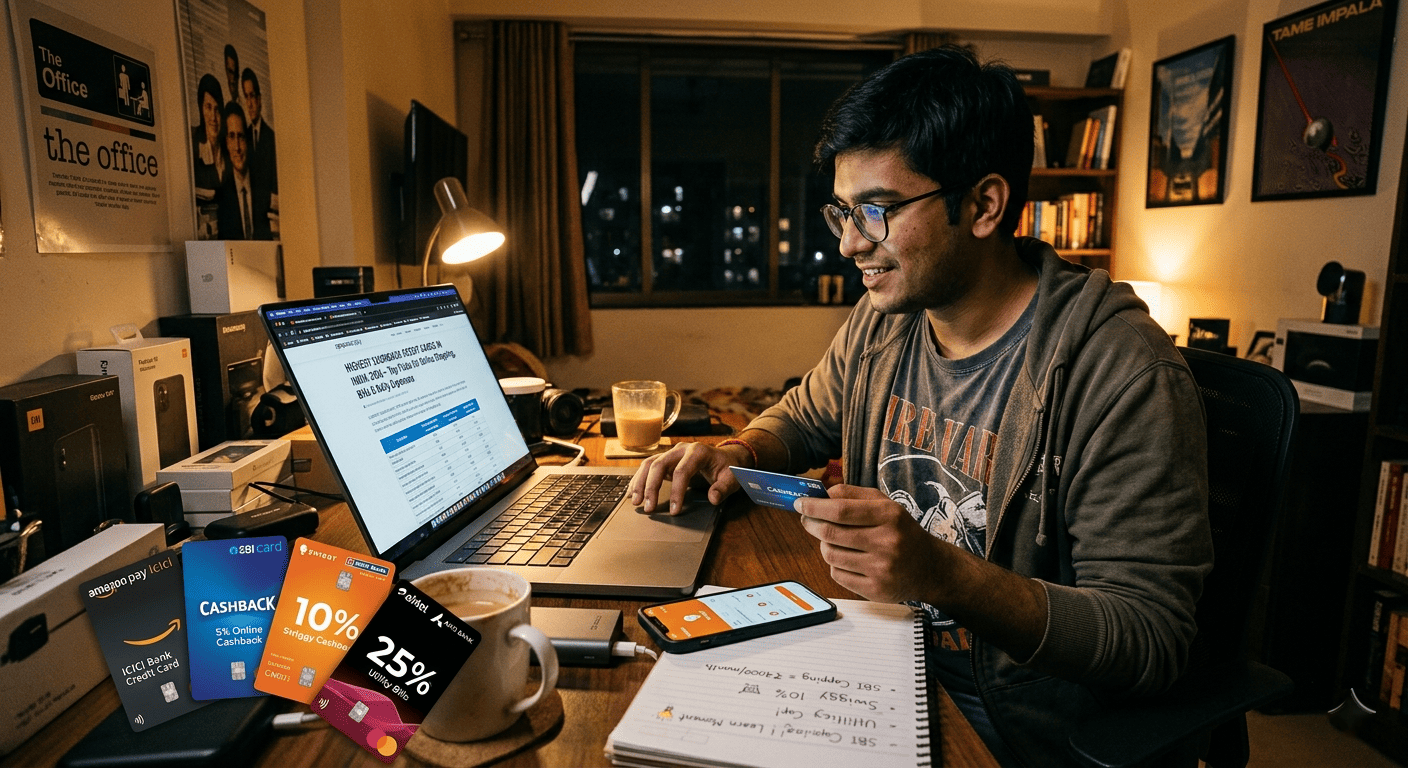
Look, I didn’t set out to become a guy who carries six different credit cards in his wallet. At first I thought people who did that were just overcomplicating their lives for a few miserable rupees. But then three years ago, during a Diwali sale, I bought a Sony Bravia TV on Amazon. My cousin used his co-branded card and got a flat 5,000 rupees back instantly. I used my regular old salary-account debit card and got… a digital scratch card that gave me a discount on an online course I’ll never take.



That was the exact moment I realized I was leaving serious money on the table.
Since then, I’ve tried, tested, and sometimes argued with customer care over pretty much every major shopping credit card in India. If you are buying everything online like I am—from phone chargers on Amazon and sneakers on Flipkart to your weekly groceries on Blinkit—you need a dedicated strategy.
Let’s break down what actually works, what looks good on paper but fails in reality, and the mistakes I made so you don’t have to repeat them.
The Big Two: Amazon Pay ICICI vs. Flipkart Axis
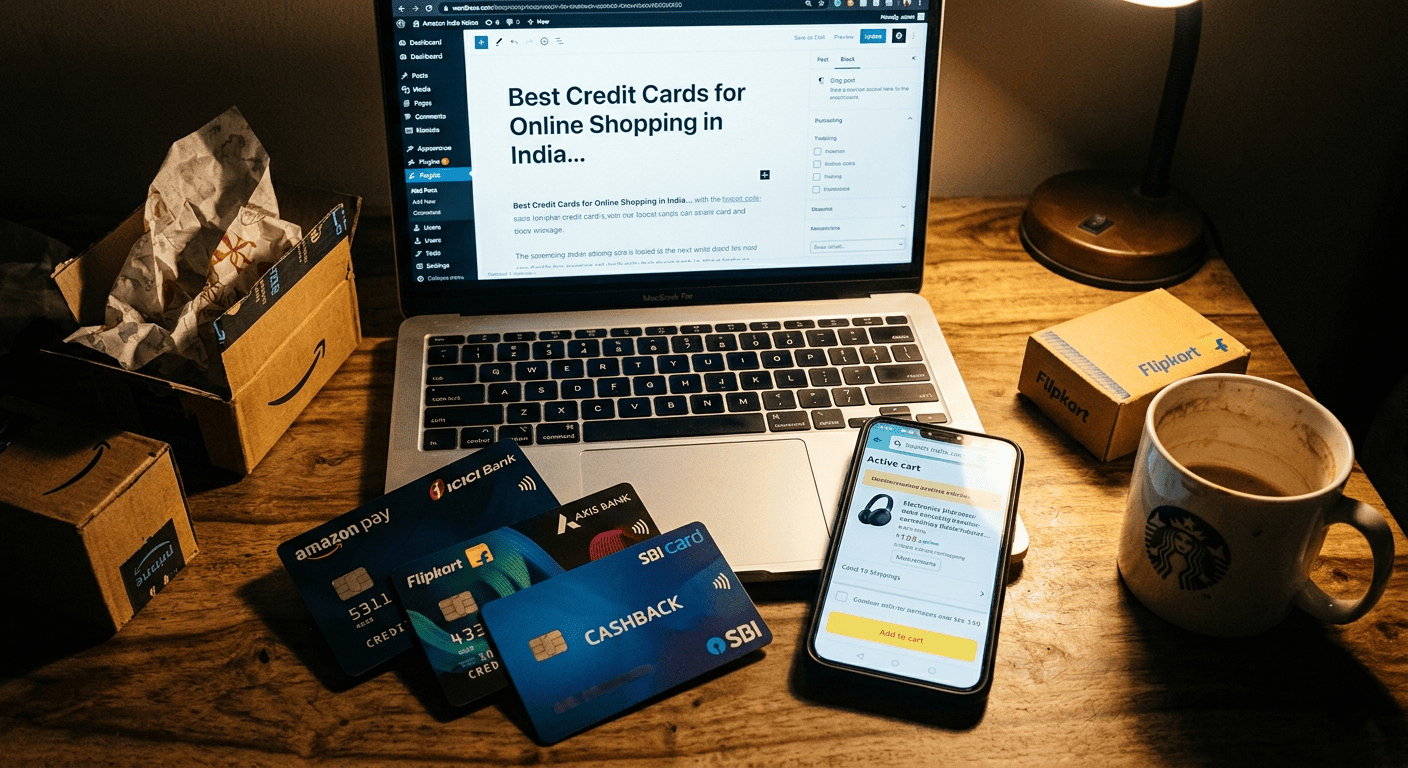
If you are just dipping your toes into this, you will almost certainly end up choosing between these two. They are the heavyweight champions of the Indian e-commerce space. I’ve had both in my wallet for over two years now, and honestly, this surprised me: they behave completely differently in practice.
Let’s look at how they stack up on paper first because the basic numbers do matter.
Co-Branded Giants Side-by-Side
| Card Name | Joining Fee | Annual Fee | Primary Cashback | Best For |
| Amazon Pay ICICI | ₹0 (Lifetime Free) | ₹0 (Lifetime Free) | 5% (Prime Members) | Amazon Shopping & Utility Bills |
| Flipkart Axis Bank | ₹500 + Taxes | ₹500 + Taxes (Waived at ₹3.5L) | 5% on Flipkart | Flipkart, Myntra, Swiggy & Uber |
I remember when I first applied for the Amazon Pay ICICI card. The biggest selling point for me was that it’s completely lifetime free. No hidden targets, no “spend Rs. X to waive the fee.” It just sits there and costs you nothing. If you are an Amazon Prime member, getting a flat, unlimited 5% back on almost everything you buy is absurdly good.
But here is a tiny detail that trips people up: the cashback doesn’t come to your bank account or your credit card statement. It gets credited directly as Amazon Pay balance at the end of your monthly billing cycle. At first I thought this was a bit annoying, but then I realized I use Amazon Pay to clear my electricity bills, recharges, and Swiggy orders anyway, so it basically acts like real money.
The Flipkart Axis card is a slightly different beast. It does charge a ₹500 annual fee, though you can get it waived if you spend over ₹3.5 lakhs in a year. The massive win here is that Axis recently updated the card to offer a crazy 7.5% cashback on Myntra (capped at ₹4,000 per quarter), along with 5% on Flipkart and Cleartrip. Plus, they give you a flat 4% on Swiggy and Uber.
The best part? The cashback adjusts directly against your next month’s credit card statement bill. No wallets, no point conversions.
The “Holy Grail” With a Catch: CASHBACK SBI Card
For a long time, the CASHBACK SBI Card was the undisputed king of online shopping. Why? Because it didn’t care where you shopped. Whether you were buying a custom desk from a random boutique website or booking movie tickets, it gave you a flat 5% cashback on almost any online spend.
Naturally, I jumped on it. But this is where my biggest learning moment happened.
I didn’t read the fine print carefully, and a recent update caught me completely off guard. SBI introduced stricter limits on how much cashback you can actually earn.
The Realistic Earning Potential
To show you what I mean, look at how the limits are split up now. This is crucial if you plan on using this card for massive electronics purchases.
| Card Name | Online Cashback % | Offline Cashback % | Maximum Monthly Cap | Exclusions to Watch Out For |
| CASHBACK SBI Card | 5% | 1% | ₹4,000 total (Max ₹2,000 Online / ₹2,000 Offline) | Rent, Fuel, Utilities, Insurance, School Fees |
I learned this the hard way. I booked a premium vacation packages online worth about ₹80,000 thinking I’d get a sweet ₹4,000 back in a single shot. Guess what? Because of the capping system where online cashback is strictly limited to ₹2,000 per statement cycle, a massive chunk of my spend earned absolutely nothing.
Don’t get me wrong, the CASHBACK SBI Card is still incredibly useful for everyday online shopping. If your monthly online spends across random websites (like Tata CliQ, Ajio, or local delivery apps) hover around ₹30,000 to ₹40,000, you will hit that sweet spot and easily maximize your returns. Just don’t rely on it as your sole card for massive, high-ticket festive season hauls anymore.
The Premium Path: HDFC Regalia Gold
Eventually, you might reach a point where you want more than just pure cashback. I reached that phase when I started traveling more for work and realized my cashback cards weren’t helping me get into airport lounges or earning me free flights.
That’s when I picked up the HDFC Regalia Gold. I didn’t expect this card to become a staple for my online shopping, but their SmartBuy platform completely changed my mind.
Pure Cashback vs. Milestone Rewards
If you are trying to decide whether to go for a free cashback card or a premium milestone card, this breakdown shows the real trade-off.
| Card Name | Annual Fee | Reward System | Key Online Benefit | Bonus Perks |
| HDFC Regalia Gold | ₹2,500 + Taxes | Reward Points (1 Point = up to ₹0.50) | 5X Reward Points via SmartBuy | Complimentary Lounge Access, Air Miles |
When you use the Regalia Gold normally, you earn a decent but unremarkable reward rate. But if you route your shopping through HDFC’s SmartBuy portal—which redirects you to Amazon or Flipkart—you get accelerated rewards.
The math works out beautifully if you know how to use it. You accumulate thousands of points that can be redeemed directly for flight bookings or hotel stays at a value of up to ₹0.50 per point. Last year, I managed to fund an entire round-trip flight from Delhi to Mumbai purely out of the reward points I gathered from buying my usual office laptop, groceries, and clothes online.
The downside? It has a ₹2,500 annual fee. If you aren’t spending at least ₹3 lakhs a year to get that fee waived, or if you don’t care about travel vouchers and airport lounges, this card will feel like an unnecessary burden compared to the zero-maintenance Amazon ICICI card.
My Strategy: How to Actually Play the Game
If you just want one card to rule them all and keep your life simple, look at where you spend 80% of your money.
- If you are a Prime addict who orders everything from groceries on Amazon Fresh to electronics on Prime Day, get the Amazon Pay ICICI. It is completely free and completely effortless.
- If you prefer Myntra for clothes and use Uber and Swiggy constantly, the Flipkart Axis card will pay for its annual fee within the first two months.
- If you shop across dozens of different websites and don’t want to be locked into one ecosystem, get the CASHBACK SBI Card, but keep an eye on that monthly statement cap.
My personal mistake was trying to optimize every single transaction down to the last decimal point. At one point, I was carrying four different cards just for online shopping, and I ended up missing a payment due date on one because I forgot the statement cycle was different. The late fees and interest instantly wiped out three months’ worth of cashback.
Keep it simple. Pick two cards that complement each other—like the Amazon ICICI for utility bills and Amazon shopping, paired with the Flipkart Axis for food delivery, cabs, and fashion. That combo covers almost 95% of the internet in India, and your wallet won’t look like a chaotic card holder deck.