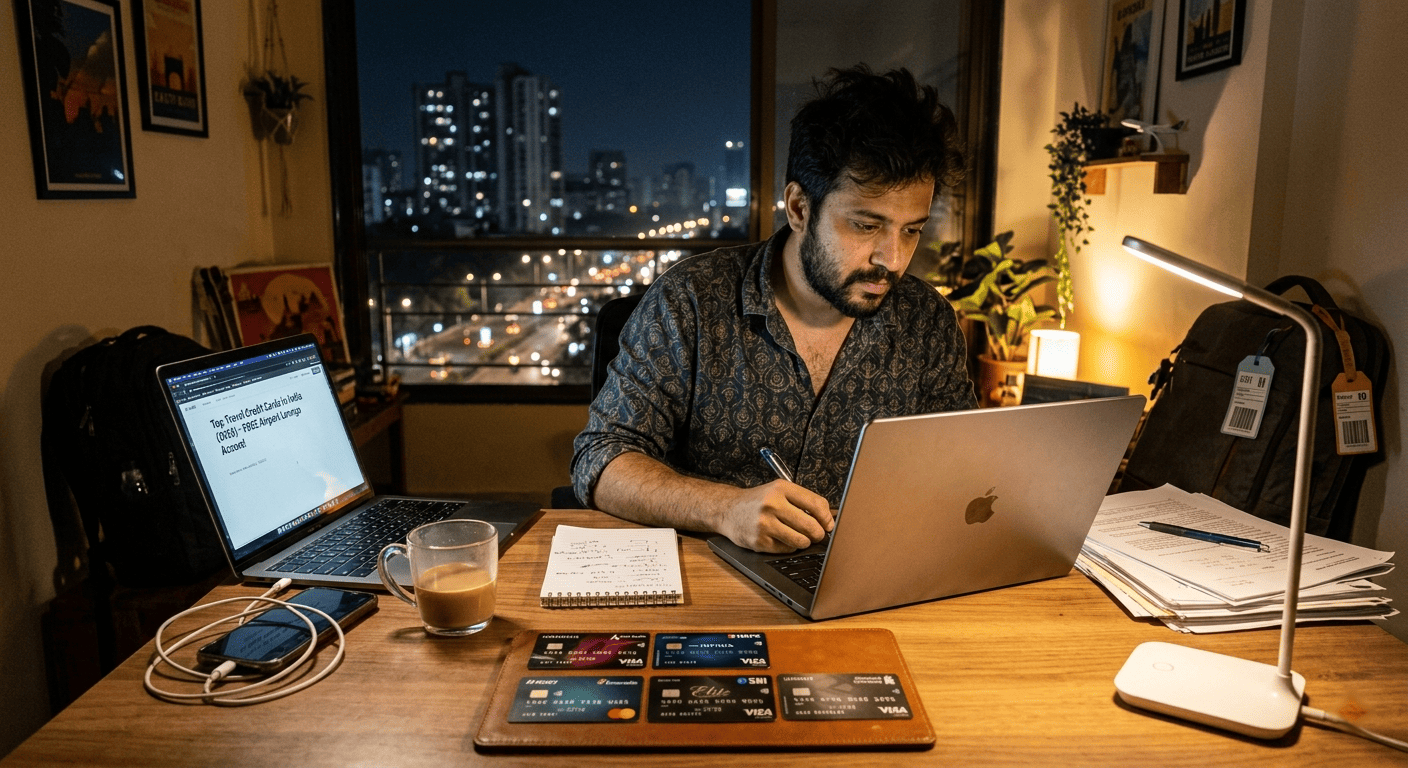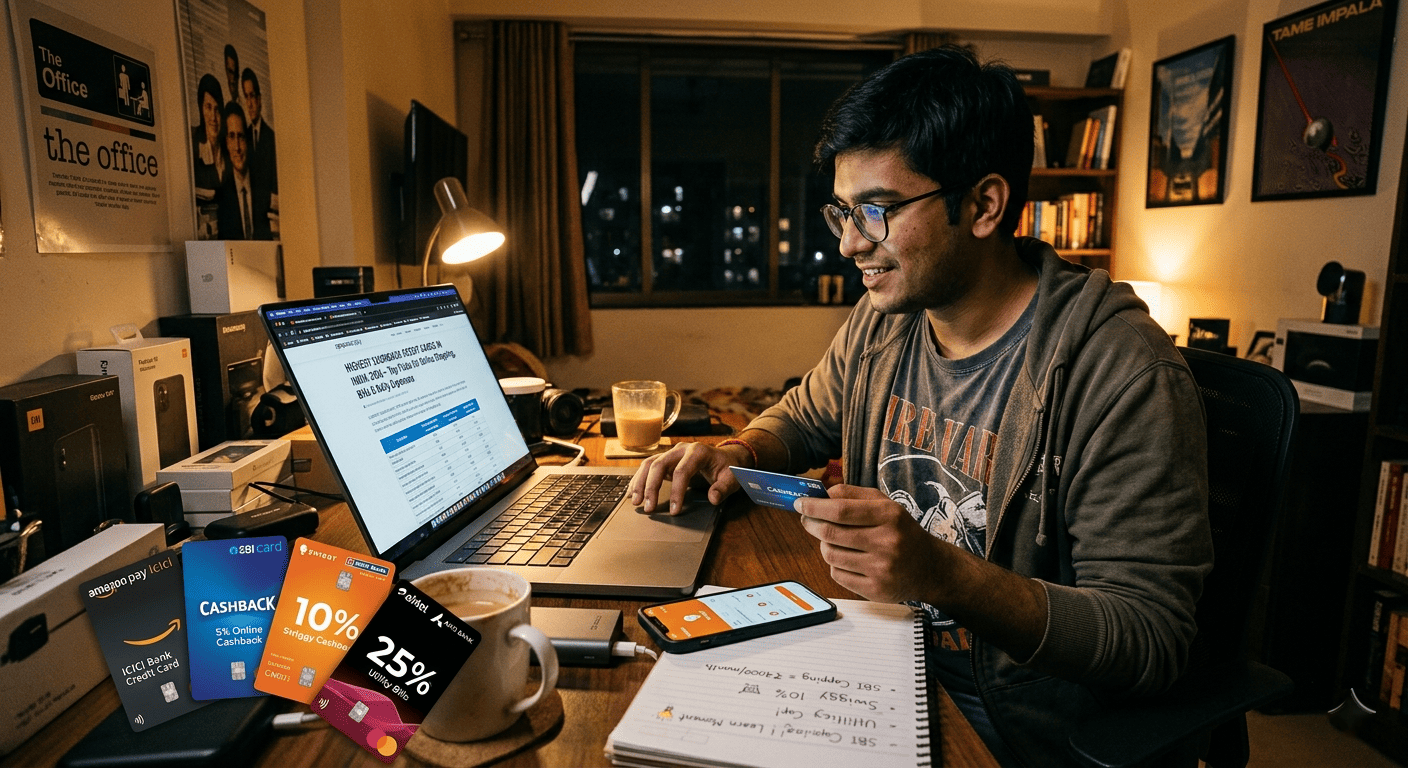
I still remember the night I sat down with three different credit card statements open on my laptop, looking at a measly pile of reward points that I could basically only redeem for a random iron box or a cheap duffel bag from a corporate catalog. It was frustrating. I was spending thousands of rupees every month on Amazon, Swiggy, and electricity bills, yet my “premium” rewards card was giving me almost nothing back in actual value.


That was the exact moment I realized I needed to stop chasing abstract points and start looking at pure, cold cashback.
But let’s be completely honest—navigating cashback cards in 2026 is an absolute minefield. Just when you think you’ve found the perfect card, a bank quietly rolls out a devaluation notice that cuts your benefits in half. I’ve personally applied for, used, and sometimes even aggressively regretted using several cards over the last couple of years.
If you are trying to cut down your monthly expenses on online shopping, utility bills, and food delivery, here is what I’ve learned from actually keeping these cards in my wallet.
The Pure Online Shopping Heavyweights
At first I thought one single card could handle all my online shopping. It turns out banks hate giving away free money without making you jump through specific hoops. If you shop across random websites rather than sticking to just one ecosystem, your options shrink fast.
Let’s look at the two cards that battle it out for general online shopping dominance: the CASHBACK SBI Card and the Amazon Pay ICICI Card.
Now, I didn’t expect this, but the CASHBACK SBI Card recently went through a massive shake-up. If you haven’t been keeping up with the news, SBI recently slashed the maximum monthly cashback cap down to ₹4,000 per statement cycle, splitting it strictly between online and offline spends. They basically capped your 5% online earnings at ₹2,000 a month, which means any online spending past ₹40,000 in a single month won’t give you that sweet 5% anymore. They also blocked cashback on government services and tolls, which really hurt my monthly budget.
On the flip side, the Amazon Pay ICICI card remains incredibly stable. It is a lifetime free card, meaning I don’t have to worry about hitting an annual spending milestone just to waive a fee. But the catch is obvious—if you aren’t an Amazon Prime member, that 5% drop down to 3%, and if you shop outside of Amazon, it drops to a basic 1%.
Here is a quick look at how these two stack up side-by-side based on my actual usage:
| Feature | CASHBACK SBI Card | Amazon Pay ICICI Bank Credit Card |
| Base Online Cashback | 5% on almost all online merchants | 5% (For Prime Members on Amazon) |
| Offline Spend Cashback | 1% | 1% |
| Joining Fee | ₹999 + GST | Nil (Lifetime Free) |
| Annual Fee | ₹999 + GST (Waived at ₹2 Lakhs spend) | Nil |
| Monthly Reward Limit | ₹2,000 for Online, ₹2,000 for Offline | No Upper Cap |
| Best For | Diverse online shopping platforms | Hardcore Amazon loyalists |
Honestly, this surprised me when I actually calculated my year-end savings: even with the recent capping, the SBI card still makes more sense if you buy things from individual brand websites, flight booking portals, or smaller e-commerce stores that don’t have their own co-branded cards. But if you do 90% of your shopping via Amazon India, the ICICI card is a complete no-brainer because that “no upper cap” rule means you can buy a massive television or laptop and get the full 5% back without hitting a ceiling.
Managing the Daily Chaos: Food, Grocery, and Utilities
Online shopping is great, but my biggest recurring leaks happen through food delivery apps and monthly utility bills. Electricity, gas pipelines, Wi-Fi, and ordering dinner because I’m too tired to cook—these add up to a scary amount of money by the end of the month.
I ended up getting the Airtel Axis Bank Credit Card specifically to tackle my broadband and electricity bills. The advertising promises a massive 25% cashback on Airtel recharges and 10% on utility bills paid via the Airtel Thanks app.
But here is my big learning moment with this card—and it’s a mistake I see a lot of people making.
I casually assumed I’d get 10% back on my ₹5,000 electricity bill. When the statement came, the cashback was way lower than I expected. I dug into the terms and realized the 10% utility cashback is strictly capped at a very low monthly limit, and it is linked directly to your base category spends. It turns out you have to actively use the card for regular transactions to maximize the accelerated cashback categories. It’s highly restrictive, but if you budget your bills right, it still covers the cost of the card within two months.
Then you have the Swiggy HDFC Bank Credit Card, which gives an incredible 10% back across the entire Swiggy ecosystem—Food, Instamart, and Dineout. If you’re someone who practically lives off Instamart groceries like I do, this card acts like a massive discount coupon on your survival expenses.
Let’s lay out the specifics for these daily-use cards:
| Feature | Airtel Axis Bank Credit Card | Swiggy HDFC Bank Credit Card |
| Primary Cashback Rate | 25% on Airtel bills, 10% on Utilities | 10% on Swiggy (Food, Instamart, Dineout) |
| Secondary Online Cashback | 10% on Zomato, Blinkit, District | 5% on broader online shopping |
| Joining / Annual Fee | ₹500 + GST | ₹500 + GST |
| Fee Waiver Milestone | ₹2 Lakhs annual spend | ₹2 Lakhs annual spend |
| Cashback Capping | Highly capped per category monthly | ₹1,500 per month on Swiggy spends |
| Best For | Household bills & Airtel users | Grocery delivery & food ordering |
The Swiggy HDFC card also gives 5% back on broader online shopping across a ton of major e-commerce platforms, which sort of makes it a quiet competitor to the SBI Cashback card if you don’t want to pay a ₹999 annual fee. Just keep in mind that the cashback comes as Swiggy Money balance, which is fine if you use the app constantly, but annoying if you want real cash back into your credit card statement to pay off your balance.
The All-Rounder Mid-Tier Option
If you hate the idea of managing four different credit cards just to optimize your spending by a few percentage points, you usually end up looking at something like the HDFC Millennia.
I used the Millennia card for a long time as my primary card before I started split-routing my expenses. It gives 5% cashback on a pre-defined list of major partner brands—Amazon, Flipkart, Swiggy, Zomato, Uber, and BookMyShow are all included.
The reason I call this a safer, human-friendly card is that it doesn’t force you to think too hard. If you use it for an Uber ride, you get 5%. If you book a movie, you get 5%. The cashback comes in the form of CashPoints, which you can easily redeem against your card statement balance at a flat 1 point = ₹1 ratio.
Let’s look at how the overall costs and rewards map out:
| Feature | HDFC Bank Millennia Credit Card |
| 5% Partner Brands | Amazon, Flipkart, Swiggy, Uber, Zomato, Myntra, etc. |
| Other Spends | 1% cashback |
| Joining & Annual Fee | ₹1,000 + GST |
| Annual Fee Waiver | Spends of ₹1 Lakh in a year |
| Lounge Access | 8 complimentary domestic visits per year |
| Best For | Beginners wanting lounge access and multi-brand 5% cash back |
The real advantage of the Millennia over something like the Amazon Pay or Airtel card is the inclusion of domestic lounge access. Most pure cashback cards completely stripped away lounge benefits over the last two years to protect their profit margins. HDFC kept it on the Millennia, though they did shift it to a milestone-based system recently where you need to spend a certain amount in a quarter to unlock the next quarter’s access.
My Personal Strategy For Keeping Things Simple
If you try to perfectly optimize every single rupee, you will end up carrying five cards, missing bill due dates, and getting hit with massive interest fees that wipe out all your hard-earned cashback in one go. Don’t do that.
What works for me is a simple three-card setup:
- The Core Shopping Card: Use the Amazon Pay ICICI if you are a Prime user, or the SBI Cashback card if you do your shopping across random fashion and electronics websites.
- The Daily Survival Card: Use either the Swiggy HDFC or the Airtel Axis card strictly for your automated utility bills, food orders, and grocery deliveries.
- The Wallet Backup: A basic lifetime free card just to keep your credit history old and structured, or something like the Millennia to handle your lounge access needs.
Before you click apply on any banner ad you see while opening your banking app, just look at your actual bank statements from the last three months. If you only spend ₹1,000 a month on Swiggy, getting a co-branded Swiggy card just because it offers “10%” is a trap. You’ll end up spending more just to justify the annual fee. Pick the card that rewards the flaws in your current spending habits, not the habits you wish you had.